How Long Do Dental Implants Last? A Complete Guide

“Dental implants are a long-term solution for missing teeth, often lasting 25 years to a lifetime with proper care. While the titanium post is permanent, the prosthetic crown may require replacement every 10–15 years. Success depends on strong jawbone support and diligent oral hygiene to prevent infection. By combining precise surgical placement with consistent brushing, flossing, and professional check-ups, most patients maintain stable, natural-looking results that function effectively for decades.”
— Dr. Bradley Rule
Dental implants are one of the most reliable ways to replace missing teeth. Many patients ask, “How long do dental implants last, and what factors affect their lifespan?”
In this guide from Rule Dentistry in Gurnee, IL, we explain how long dental implants last, what influences implant longevity, and how proper care supports long-term success. Dr. Bradley and Dr. Scott also discuss the role of bone health, oral hygiene, and precise implant placement.
If you’ve experienced tooth loss, you likely want a long-lasting solution that feels natural. Dental implants are designed to replace both the artificial tooth root and the visible artificial tooth, allowing patients to restore function and appearance after losing natural teeth.
With healthy gums, strong bone, and consistent oral hygiene, dental implants can last for decades—and in many cases, a lifetime.
At Rule Dentistry, Dr. Bradley and Dr. Scott guide patients through every stage of the dental implant procedure, from evaluation to final restoration. Our goal is to restore comfort, chewing strength, and confidence with a stable tooth replacement that blends naturally with surrounding teeth.
Let’s explore what determines implant longevity and how to support long-term success with dental implants.
What are dental implants, and how do they work?
A dental implant replaces the root of a lost tooth. The titanium post acts as an artificial tooth root that anchors securely in the jawbone.
During dental implant surgery, the implant is placed into the implant site within the jawbone. The body then begins the osseointegration process, a biological process in which bone cells attach to the implant surface.
This integration allows the implant to function like a natural root and support an artificial tooth.
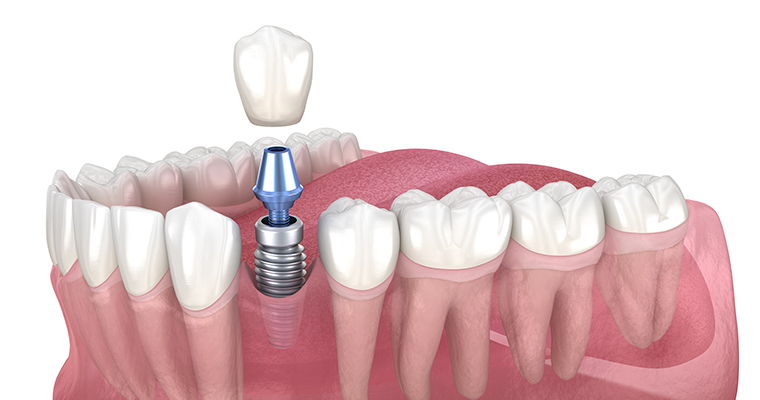
A complete dental implant system typically includes:
- A titanium implant post
- An abutment connecting the restoration
- A crown designed to resemble a natural tooth
Because implants integrate with healthy bone, they can provide a long-term solution compared with many other tooth replacement options.
How long do dental implants last on average?
Patients frequently ask, how long do dental implants last and whether implants last as long as natural teeth.
Research shows that dental implants last for decades in many patients. The lifespan of dental implants often exceeds 25 years, and some implants last a lifetime with proper care.
| Component | Typical Lifespan |
|---|---|
| Implant post | 25+ years or may last a lifetime |
| Implant crown | 10–15 years |
| Implant restoration | Periodic maintenance or replacement |
Because of their high success rate, dental implants are widely considered one of the most reliable tooth replacement options.

Factors affecting implant longevity
Several factors affecting implant longevity determine how long dental implants last.
Key factors include:
- Bone quality and overall bone health
- Adequate blood flow and healthy blood vessels
- Consistent oral hygiene
- Healthy gums and strong gum health
- Avoiding harmful habits such as smoking
- Managing medical conditions
Patients with healthy bone, sufficient jawbone, and strong oral health often experience the best implant survival and long-term success.
Poor oral hygiene, untreated gum disease, or teeth grinding may increase the risk of dental implant failure.
The role of bone health in implant success
Strong bone health is essential for successful implant placement.
When a tooth is lost, the surrounding bone may gradually shrink. This bone loss can affect future implant placement if untreated.
In some situations, a bone graft may be recommended before dental implant surgery. A bone graft helps rebuild healthy bone so the implant has a stable foundation.
Healthy blood vessels also support the healing process, delivering nutrients and oxygen needed for the osseointegration process.
Without adequate bone quality and blood flow, the risk of implant failure may increase.
What happens during the dental implant procedure?
The dental implant procedure is typically completed in several stages:
- Exam and imaging
- Surgical implant placement
- Healing and bone integration
- Final restoration with a single crown or other prosthetic
During dental implant surgery, the implant is placed within the jawbone at the planned implant site.
Over the next few months, the healing process allows the bone to fuse with the implant through osseointegration.
Tiny blood vessels form around the implant and strengthen the surrounding area, helping stabilize the implant for long-term function.
Why oral hygiene matters for dental implants
Daily oral hygiene plays a major role in implant maintenance and implant longevity.
Although implants cannot decay like natural tooth enamel, the surrounding gums and bone remain vulnerable to infection.
Good habits include:
- Brushing twice daily
- Flossing daily
- Maintaining excellent oral hygiene
- Cleaning around the implant site
Without proper cleaning, gum inflammation or peri-implant disease may develop. These infections affect the gums and surrounding bone, potentially leading to implant failure.
Maintaining strong oral hygiene is one of the most effective ways to ensure long-term dental implant performance.
Signs of implant problems or implant failure
Although rare, implant failure can occur.
Common warning signs include:
- Pain near the implant site
- Swelling of the gums
- Bleeding or infection
- A loose implant
- Persistent discomfort
These symptoms may indicate peri-implant disease or a failed implant.
If problems appear in the early stages, treatment can often protect the surrounding bone and gums.
This is why regular dental visits and regular dental checkups remain essential after receiving dental implants.
How gum disease affects dental implants
Patients with gum disease may have a higher risk of dental implant failure.
Inflammation around the gums can spread to the implant site, damaging the supporting bone. This condition, called peri-implant disease, is a leading cause of failed implant cases.
Symptoms may include:
- Red or swollen gums
- Bleeding while brushing
- Bone loss around the implant
Protecting gum health through strong oral hygiene and regular dental visits is essential for implant longevity.
Dental implants vs. other tooth replacement options
When comparing tooth replacement options, implants often provide the greatest durability.
| Treatment | Average Longevity |
|---|---|
| Dental implants | 25+ years or may last a lifetime |
| Dental bridge | 7–10 years |
| Dentures | 5–10 years |
Unlike many other tooth replacement options, implants stimulate the bone, helping prevent bone loss after tooth loss.
They also protect other teeth from shifting and restore chewing strength similar to natural teeth.
Can dental implants fail?
Although uncommon, dental implant failure can occur.
The overall success rate of dental implants is typically above 95 percent.
Risk factors may include:
- Inexperienced surgeon
- Poor oral hygiene
- Untreated gum disease
- Smoking increases infection risk
- Severe teeth grinding
If a failed implant occurs, a new dental implant may sometimes be placed after healing.

Lifestyle habits that protect dental implants
Daily habits influence how long dental implants last.
Helpful habits include:
- Avoid smoking
- Protect teeth from hard foods
- Limit hard candy
- Wear nightguards for teeth grinding
- Maintain consistent oral hygiene
These habits reduce normal wear and help implants last a lifetime.
Implant maintenance and long-term care
Like natural teeth, implants require ongoing implant maintenance.
Recommended care includes:
- Professional cleanings
- Regular dental checkups
- Monitoring the surrounding area
- Practicing consistent oral hygiene
These steps support long-term success and protect the lifespan of dental implants.
Are dental implants a good choice for older adults?
Yes. Older adults often benefit from dental implants.
Age alone does not prevent treatment. What matters most is:
- Adequate healthy bone
- Stable medical conditions
- Strong oral hygiene
Many older adults receive implants successfully and experience improved comfort and chewing ability.
Are dental implants worth it?
For many patients, dental implants provide a reliable and natural-feeling tooth replacement.
Benefits include:
- Stable bite strength
- Natural-looking teeth
- Protection against bone loss
- Durable tooth replacement
Because implants integrate with the jawbone, they closely mimic the function of natural teeth.
Patient FAQs
1. Does getting a dental implant hurt?
Most patients report minimal discomfort. The procedure is typically performed with local anesthesia, and any soreness afterward is manageable with over-the-counter pain relief.
2. How long does the full dental implant process take?
The entire process can take anywhere from 3 to 6 months, depending on healing time and whether additional procedures like bone grafting are needed.
3. Are dental implants covered by insurance?
Coverage varies by provider. Some plans may cover parts of the procedure, such as the crown, but not the implant itself. It’s best to check with your insurance company.
4. Can I go back to work after implant surgery?
Yes, many patients return to work the next day. However, it’s recommended to avoid strenuous activity for a few days to support healing.
5. What foods should I avoid after getting an implant?
Immediately after surgery, avoid hard, crunchy, or sticky foods. Stick to soft foods like yogurt, eggs, and smoothies until your dentist advises otherwise.
Final thoughts
If you’ve been wondering how long dental implants last, the outlook is very encouraging. With strong oral hygiene, healthy gums, and consistent proper care, dental implants last for decades and may even last a lifetime.
At Rule Dentistry in Gurnee, IL, Dr. Bradley and Dr. Scott help patients restore comfort, confidence, and long-term oral health with advanced dental implant surgery and modern tooth replacement options.
If you are considering a new dental implant, our team can evaluate your bone health, review factors affecting implant success, and recommend the right treatment plan.
References
ADA – American Dental Association: Dental Implant Survival ResearchThis opens a new tab to the adanews.ada.org website.
ANSI / ADA: Dental Implants Standards and Lifespan InformationThis opens a new tab to the blog.ansi.org website.
- American Academy of Implant Dentistry (AAID)This opens a new tab to the aaid-implant.org website.
- American Dental Association (ADA)This opens a new tab to the ada.org website.
- National Institute of Dental and Craniofacial Research (NIDCR)This opens a new tab to the nidcr.nih.gov website.
Or:
- Call us: 847-662-7717This link opens an application to make a phonecall
- Email us: info@ruledds.comThis link opens an application to send an email
Rule DentistryThis link leads to Home page is located in Gurnee, IL, and we happily welcome folks from neighboring areas.