Dental Implants Explained: The Secret to a Permanent Smile

Dental implants are one of the most predictable and long-lasting ways to replace missing teeth because they restore both the visible tooth and the root beneath it. By supporting the jawbone and surrounding structures, implants help maintain oral health and facial integrity. Backed by trusted organizations like the American Dental Association, Mayo Clinic, and NIH, implants offer patients a stable, natural-feeling solution that can truly transform both function and confidence. — Dr. Scott Rule
Dental implants explained in simple terms help patients understand one of dentistry’s most reliable solutions for replacing missing teeth. Dental implants restore function, support oral health, and protect the jawbone while looking and feeling like natural teeth.
In this guide from Rule Dentistry in Gurnee, IL, doctors Bradley, Scott, and Konz explain how dental implants work, who may qualify, and what the dental implant procedure involves so patients can make confident decisions about tooth replacement.
Why tooth loss matters for your oral health
Tooth loss affects more than appearance. It can change how you chew, speak, and smile. When missing teeth remain untreated, the jawbone begins to shrink because it no longer receives stimulation from the tooth root. Over time, this loss of stimulation may lead to bone loss, weakening the surrounding bone and affecting facial structure.
At Rule Dentistry in Gurnee, IL, our team helps patients restore their smiles with modern options for replacing missing teeth. Drs. Bradley, Scott, and Konz often recommend dental implants because they function similarly to natural teeth and help maintain long-term oral health.
Patients who once struggled with removable dentures or unstable replacement teeth often discover that implants provide a stable, natural-feeling solution.
Dental implants explained: What they actually are
When patients search for dental implants explained, they usually want to understand what an implant really is.
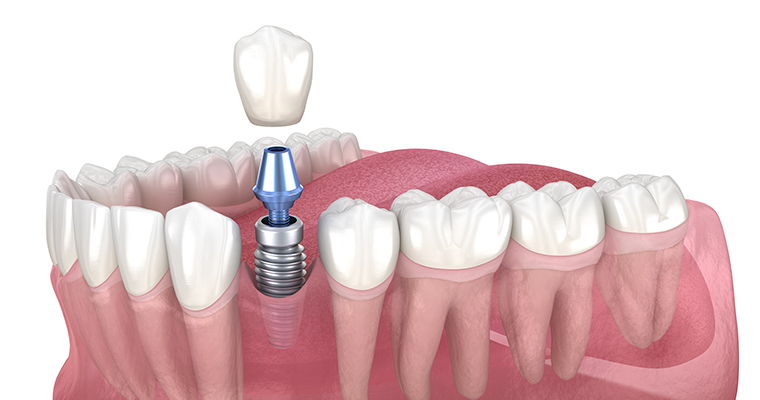
A dental implant is a small titanium implant post that replaces the artificial tooth root. During implant surgery, the post is surgically inserted into the jawbone at the implant site.
Once the implant heals, it supports a new artificial tooth, several artificial teeth, or other replacement teeth. The final restoration may include a custom-made crown designed to match surrounding natural teeth.
Unlike removable dentures, most dental implants stay firmly anchored in the bone. A biological process called osseointegration allows the implant to fuse with the jawbone and become a stable foundation for a final crown.
According to the American Dental Association This opens a new tab to the adanews.ada.org website., long-term studies show implants work successfully for many patients who maintain good oral hygiene and regular dental visits.
How dental implants replace missing teeth
Dental implants restore both the visible tooth and the underlying tooth root.
Traditional bridges rely on adjacent teeth for support, which may require reshaping adjacent healthy teeth. In contrast, implants stand independently within the bone, protecting neighboring teeth and surrounding natural teeth.
Benefits of dental implants may include:
- Stable artificial teeth
- Protection for neighboring teeth
- Support for surrounding natural teeth
- Improved chewing ability
- Jawbone preservation
- Long-term tooth replacement
Patients who previously needed to wear dentures often appreciate the stability implants provide.

The benefits of dental implants for long-term tooth replacement
Understanding the benefits of dental implants helps patients see why this treatment is commonly recommended for replacing missing teeth.
Compared with traditional dentures, implants can provide:
| Feature | Dental Implants | Traditional Dentures |
|---|---|---|
| Stability | Fixed within the jawbone | May shift |
| Longevity | Long-term tooth replacement | May require replacement |
| Bone Support | Helps reduce bone loss | Does not stimulate bone |
| Appearance | Looks like natural teeth | May appear artificial |
Because the implant post replaces the tooth root, implants help maintain bone structure, support facial structure, and protect other teeth.
Who is a candidate for dental implants?
Most patients with tooth loss may qualify for dental implants after a professional evaluation.
At Rule Dentistry, Drs. Bradley, Scott, and Konz begin with a personalized treatment plan.
Ideal candidates typically have:
- Healthy gums without untreated gum disease
- Adequate jawbone or enough bone for implant placement
- Good oral health
- Commitment to good oral hygiene
Certain medical conditions, including uncontrolled diabetes, may affect healing and require additional planning.
If severe bone loss is present, a bone graft may rebuild the bone before dental implant placement.
The dental implant procedure step-by-step
Many patients want to understand the dental implant procedure before treatment begins.
The process may include several surgical procedures:
- Evaluation and imaging
- Tooth extraction, if necessary
- Bone graft if bone loss is present
- Dental implant placement
- Healing and integration
- Placement of the final restoration
During dental implant surgery, the implant post is placed in the jawbone. Over time, the implant heals as the bone grows around the implant.
What happens during implant surgery?
Implant surgery is typically considered minor surgery performed by a trained oral surgeon or experienced general dentist.
The oral and maxillofacial surgeon or dentist prepares the implant site and inserts the implant post.
Key steps may include:
- Preparing the bone
- Placing the artificial tooth root
- Securing the implant
These surgical procedures allow the implant to function similarly to a natural tooth root.
Healing and the process called osseointegration
After implant placement, the healing period begins.
During this stage, the process called osseointegration occurs as the bone fuses around the implant.
This stage is critical because it allows the implant to function like a natural tooth root and support a new tooth.
Healing factors may include:
- Overall oral health
- Bone density
- Whether a bone graft was required
Some patients receive a temporary tooth during healing so they maintain appearance and function.
Replacing one tooth with a single tooth implant
A single tooth implant is one of the most common ways to address tooth loss.
If you lose one tooth, a single tooth implant can replace it without affecting adjacent teeth or other teeth.
The implant supports a new artificial tooth that blends with surrounding natural teeth. This helps stabilize the remaining teeth and preserve the jawbone.
Dental implants for several teeth or full smiles
Implants can replace several teeth or even a full arch of replacement teeth.
Options may include:
- Implant-supported dentures
- Bridges supported by implants
- Full-arch implant restorations
Many patients who previously needed to wear dentures find that implant-supported options provide better stability and comfort.
Why dentures sometimes lead to bone loss
Traditional dentures rest on the gums and do not stimulate the jawbone.
Without stimulation from a tooth root, the bone gradually shrinks. This may change facial structure, loosen dentures, and contribute to additional tooth loss.
Because dental implants are anchored in the bone, they support jawbone preservation and maintain long-term oral health.
Risks and possible implant failure
Like all surgical procedures, implant surgery carries some risks.
Possible complications may include:
- Infection at the implant site
- Damage to surrounding structures
- Rare allergic reaction
- Implant failure
Although uncommon, implant failure may occur if the implant heals poorly or if patients have untreated gum disease.

How to protect your dental implant investment
After the final restoration, caring for implants is similar to caring for natural teeth.
Patients should maintain:
- Good oral hygiene
- Daily brushing and flossing
- Healthy gums
- Regular dental visits
A dental professional will monitor the bone, gums, and tissues around the implant during exams.
Why patients in Gurnee choose Rule Dentistry
Patients in Gurnee, IL, trust Rule Dentistry for advanced dental implant surgery and personalized care.
Drs. Bradley, Scott, and Konz develop a custom treatment plan designed to restore function and support oral health.
Our team focuses on:
- Predictable implant surgery
- Diagnosis and management of gum disease
- Long-term support for oral health
Most patients report that their dental implants feel similar to their original natural teeth.
Life after dental implants
After treatment, most patients experience significant improvements in comfort and function.
Patients often notice:
- Easier chewing
- Improved speech
- Greater stability than dentures
- A more confident smile
Because implants support artificial teeth This opens a new tab to the fda.gov website. anchored in the jawbone, they restore function while protecting the facial structure.
A final thought
If you are living with missing teeth or tooth loss, modern dentistry offers reliable solutions. Dental implants provide stable replacement teeth designed to restore comfort, function, and confidence.
At Rule Dentistry in Gurnee, IL, doctors Bradley, Scott, and Konz help patients determine whether implant treatment is appropriate. With the right treatment plan, a healthy smile can last for decades.
Frequently asked questions
Are dental implants safe for older adults?
Yes. Age alone does not prevent implant treatment. Many older adults receive implants successfully as long as their bone and overall health support healing.
Can smokers get dental implants?
Smoking increases the risk of implant failure and delayed healing. Your dentist may recommend quitting or reducing smoking before implant surgery.
Are dental implants covered by insurance?
Some insurance plans cover portions of implant treatment. Coverage often varies depending on the provider and the patient’s dental benefits.
How long do dental implants last?
With proper care, implants can last decades. Some studies show many implants functioning successfully for 25 years or longer.
Can dental implants replace all teeth?
Yes. Full-arch implants can support complete restorations for patients missing all teeth in one or both arches.
Or:
- Call us: 847-662-7717This link opens an application to make a phonecall
- Email us: info@ruledds.comThis link opens an application to send an email
Rule DentistryThis link leads to Home page is located in Gurnee, IL, and we happily welcome folks from neighboring areas.